Elevate Your Message with Content Writing Illustration
When you are building a brand or designing a website, the visual elements you choose tell a story before a single sentence is read. In a crowded digital landscape, generic stock imagery often fails to capture the nuance of a specific message. This is where the Content Writing Illustration pack steps in. It is not just a collection of graphics; it is a strategic visual toolkit designed to bridge the gap between written ideas and visual communication. Whether you are a blogger trying to explain a complex concept or a small business owner launching a new landing page, having the right illustration can drastically change how your audience perceives your content.
This file set is built for versatility. It includes both Eps and Jpeg formats, ensuring that you have the scalability for print and the convenience for digital use. The Eps vector files allow you to resize the artwork to fit a massive billboard or a tiny mobile app icon without losing a pixel of quality. Meanwhile, the Jpegs are ready for immediate upload to your website or social media management tools.
Understanding the Visual Language
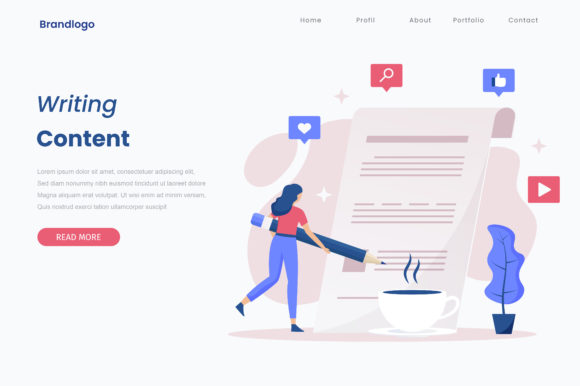
The style of the Content Writing Illustration is rooted in modern, flat design aesthetics. It avoids the dated 3D renders of the early 2000s, opting instead for clean lines, geometric shapes, and a thoughtful color palette. This style feels professional yet approachable, making it a perfect match for the SaaS (Software as a Service) industry, educational platforms, and modern startups. The illustrations often depict concepts like "idea generation," "typing," or "publishing," using metaphorical imagery that resonates with anyone involved in the creative process.
One of the strongest aspects of this asset is its personality. It strikes a balance between corporate clarity and creative flair. If you are designing a landing page for a writing agency, these visuals immediately establish credibility. They suggest that your brand is organized, tech-savvy, and focused on clear communication. Unlike chaotic or overly abstract art, these illustrations serve a functional purpose: they guide the user's eye and reinforce the text they accompany.
Practical Applications for Designers and Marketers
The utility of the Content Writing Illustration extends far beyond simple decoration. For web designers, these assets are invaluable for breaking up long blocks of text. A well-placed illustration can act as a visual anchor, giving the reader’s eyes a rest and making the content feel less intimidating. Consider using them in the "How It Works" section of a homepage. Instead of three bullet points, three distinct illustrations can explain the user journey much more effectively.
For marketers and social media managers, consistency is key. Using these illustrations across your Instagram stories, LinkedIn posts, and email newsletters creates a cohesive brand identity. When a follower sees your specific style of illustration, they immediately recognize your brand, even before seeing your logo. This repetition builds trust and professional recognition over time.
- Mobile Apps: Use the vector elements to create onboarding screens that teach users how to navigate your interface.
- Blog Headers: Replace generic stock photos with these illustrations to give your articles a unique, branded look.
- Presentations: Entrepreneurs pitching to investors can use these visuals to make slide decks look polished and cohesive.
Integrating Illustrations into Your Brand Strategy
Choosing the right illustration is only half the battle; integrating it effectively is where the real work begins. When working with the Content Writing Illustration files, think about your existing color scheme. Because the files are provided in Eps format, you can easily edit the colors in software like Adobe Illustrator or Affinity Designer to match your brand’s hex codes. This ensures that the illustration doesn't look like an afterthought but rather a custom-designed element of your ecosystem.
Furthermore, pay attention to visual hierarchy. An illustration should support your headline, not compete with it. If your landing page has a bold, heavy headline, a lighter, more detailed illustration might work best to provide balance. Conversely, if your text is minimal, a bolder illustration can carry the weight of the design. This interplay between text and image is crucial for maintaining readability and keeping the user engaged.
File Formats and Technical Considerations
The inclusion of both Eps and Jpeg files offers significant flexibility for different workflows. The Eps vector format is industry-standard for print production. If you are creating posters, banners, or packaging, you need vectors to ensure the lines remain crisp at any scale. On the other hand, the Jpeg files are optimized for web performance. They are lightweight enough to ensure your page load speeds remain fast, which is a critical factor for SEO and user retention.
When downloading the asset, ensure you organize your library. A common mistake among content creators and hobbyists is dumping files into a generic folder. Create specific directories for "Web Assets," "Print Assets," and "Source Files." This small organizational step saves hours of searching later, especially when you are working under tight deadlines.
Boosting Engagement Through Visual Storytelling
Humans are visual creatures. Studies consistently show that content paired with relevant imagery receives significantly more engagement than text-only content. However, the image must be relevant. The Content Writing Illustration is specifically tailored for niches like publishing, blogging, and digital marketing. When you use an image of a person typing on a laptop to accompany an article about "Productivity Tips," the connection is immediate and intuitive.
This type of visual storytelling helps reduce bounce rates. If a visitor lands on your page and sees a wall of text, they are likely to leave. But if they are greeted by an engaging illustration that captures the essence of the topic, they are more likely to scroll down and read the introduction. It creates an emotional bridge, making the technical information feel more accessible and less dry.
Final Thoughts on Versatility
Ultimately, the value of a design asset lies in its adaptability. The Content Writing Illustration pack is not limited to one specific industry. A freelance writer might use it to design their portfolio site, while a startup founder might use the same images for their pitch deck. It serves as a universal language of creativity and productivity.
By leveraging these high-quality vectors and images, you are not just decorating a page; you are investing in your brand's visual communication strategy. It signals to your audience that you care about the details and that you understand the importance of a polished presentation. Whether for a mobile app, a website, or a printed poster, these illustrations provide the professional touch needed to stand out.