Designing with Indulgence: Using Sweet Desserts Watercolor Clipart
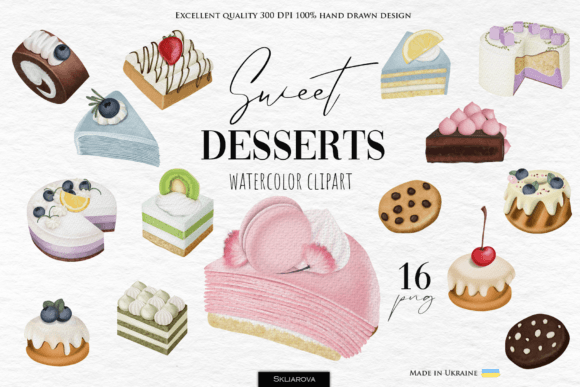
There’s a specific kind of warmth that watercolor brings to design. It’s organic, a little unpredictable, and full of character. When that texture is applied to something universally loved—like cake and sweets—the result is a powerful visual asset. The Sweet Desserts Watercolor Clipart set isn’t just a collection of images; it’s a toolkit for injecting personality, charm, and a handcrafted feel into projects that need to connect on an emotional level.
The Visual Language of Hand-Painted Sweets
This collection features 16 distinct illustrations, each capturing the soft, blended washes and subtle textural details that define quality watercolor art. You’ll find cakes, cupcakes, and confections rendered with a sense of whimsy and realism. The color palette is vibrant yet soft, avoiding harsh digital flatness in favor of a more natural, artisanal look. The transparent .png backgrounds are critical here, allowing each element to be placed seamlessly onto any surface—whether it’s a textured paper background for a wedding invitation or a clean digital canvas for a website header.
The personality of this clipart set is approachable, celebratory, and nostalgic. It doesn’t scream for attention with loud graphics; instead, it invites viewers in with a gentle, handcrafted aesthetic. This makes it exceptionally versatile. It can feel playful for a children’s party brand, sophisticated for a boutique patisserie, or heartfelt for a family recipe blog. The high-resolution 300 dpi files ensure that whether you’re designing a small label or scaling up for a poster, the integrity of the watercolor texture remains crisp and professional.
Strategic Applications: Beyond Simple Decoration
The real value of assets like the Sweet Desserts Watercolor Clipart lies in their strategic application. They are more than decorative elements; they are tools for building brand identity and enhancing user experience. For entrepreneurs in the food and beverage industry, these illustrations can become the cornerstone of a brand’s visual language. Imagine them integrated into a bakery’s logo, used consistently across menu designs, social media posts, and even printed on merchandise like aprons or tote bags. This creates immediate recognition and a cohesive, appetizing brand identity.
For designers and marketers, the clipart set offers a solution to the challenge of creating engaging content quickly. A blogger can use a cupcake illustration as a featured image for a recipe post, instantly setting a sweet and inviting tone. An invitation designer can create a suite of wedding stationery where the cake illustration ties together the save-the-date, the main invite, and the thank-you card. The applications extend into packaging design, where a watercolor sweet can adorn a jar of homemade jam or a box of artisanal chocolates, signaling quality and care to the consumer.
Practical Integration for Maximum Impact
Using clipart effectively requires more than just placing it on a page. Consider these practical approaches:
- As a Focal Point: Let a detailed cake illustration serve as the hero image on a landing page or the central motif on a poster. Pair it with a clean, modern sans serif font for headlines to create a balanced visual hierarchy.
- As a Subtle Accent: Use smaller sweets or individual elements (like a cherry or a sprinkle) as repeating patterns for backgrounds, borders, or icons. This adds depth without overwhelming the primary content.
- In Font Pairing: While these are illustrations, not a typeface, they can inform your typographic choices. The organic, fluid nature of watercolor pairs beautifully with a complementary script font or a handwritten font for a cohesive, artisanal feel. For contrast and readability in body text, a sturdy serif font or a geometric sans serif font works well.
Always test how the clipart interacts with your chosen color scheme. The watercolor washes have their own colors, so ensure your background and text colors complement rather than clash. The transparency of the files is a major asset here, allowing the underlying design to breathe.
Evaluating Fit and Ensuring Professional Use
Before incorporating any design asset, ask a few key questions. Does the playful, hand-painted style align with the project’s tone? For a serious financial report, probably not. For a café’s branding, a children’s book, or a celebratory event—absolutely. The style of the Sweet Desserts Watercolor Clipart leans towards the celebratory and personal, making it ideal for projects where warmth and approachability are goals.
Consider the technical requirements. The 2500×2500 pixel size at 300 dpi is print-ready, which is a significant advantage for commercial projects. You can confidently use these for printing on fabric, large-format posters, or high-quality labels without worrying about pixelation. The RGB color mode is perfect for digital and screen-based applications. If your final output is for professional offset printing, you may need to convert the color profile, but the high resolution provides a solid starting point.
Finally, while the set is versatile, its effectiveness hinges on thoughtful composition. Don’t overcrowd a design. Sometimes, a single, well-placed illustration has more impact than scattering several. Use the clipart to guide the viewer’s eye, to break up text blocks, or to frame important information. When used with intention, these watercolor desserts do more than decorate—they communicate a story of quality, care, and sweet delight, elevating your project from mundane to memorable.